- 2386 Clower St, Snellville, GA 30078
- (678) 835-4146
Fixture Install
At Snellville Pipe Pros, we provide high-quality plumbing fixture installation and repair throughout Snellville. From faucets and sinks to toilets, tubs, and showers, we help homeowners and businesses upgrade worn fixtures, improve functionality, and give kitchens and bathrooms a fresh, finished look.
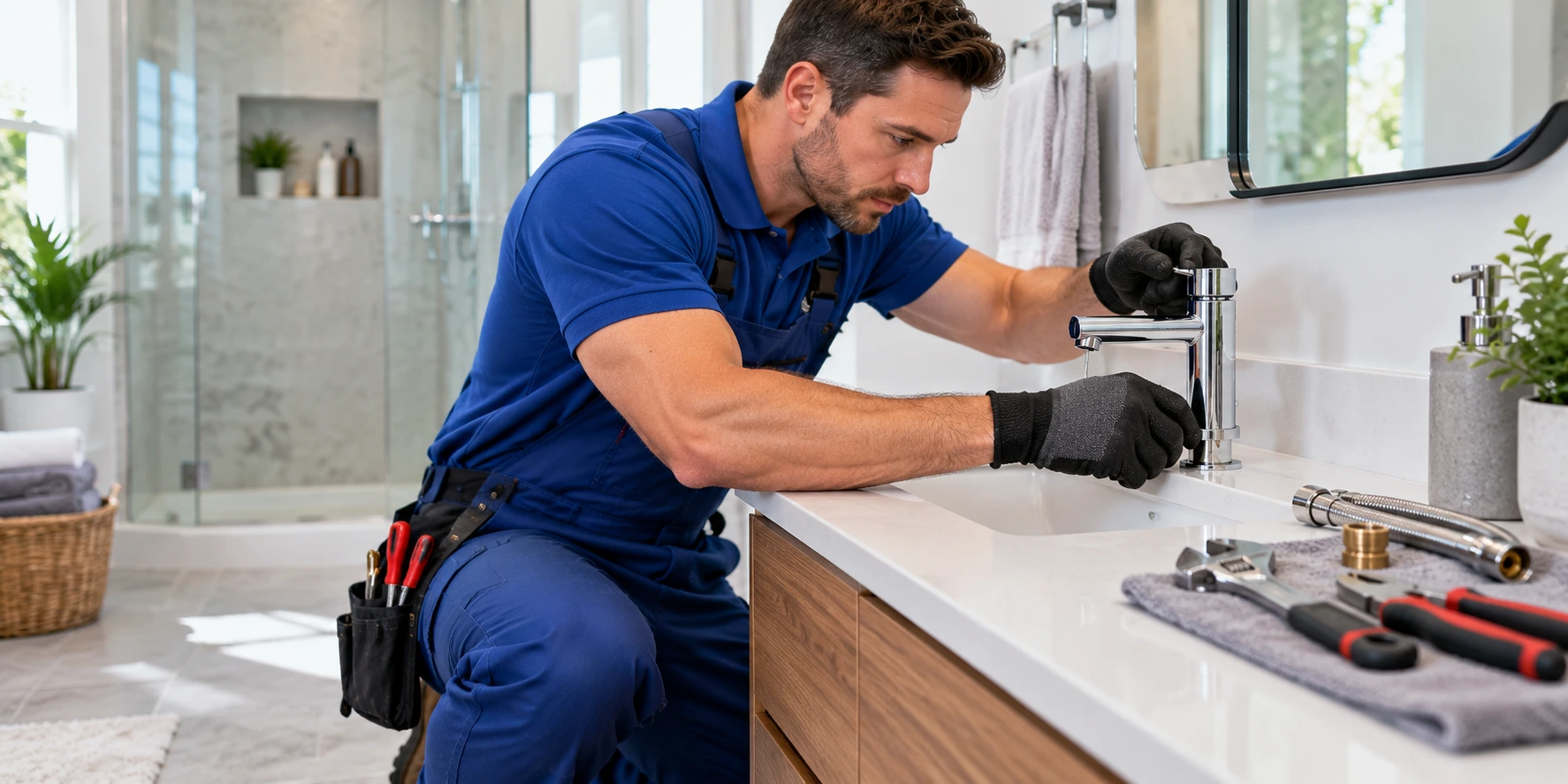
Snellville Pipe Pros handles fixture installation in Snellville for houses, townhomes, and condos when a faucet, toilet, shower valve, or stop is leaking, rocking, or simply worn out. We help homeowners who need the trim to work with the pipe that is already in the wall, not fight it. Along with faucet installation, toilet installation, shower valve replacement, and sink installation, we also take on pipe repair, drain cleaning, and hot water heater calls when the fixture is only the last piece of a larger water problem.
In 30078, a lot of the baths we open still sit on copper or galvanized stubs from the 1970s, and a cartridge swap that ignores those stubs does not last. We test house pressure and the last section of supply before we pull a faucet or a bowl, and we wipe the cabinet or the floor before we leave. Nights and weekends stay covered 24/7, so a faucet dripping all night does not have to wait for weekday hours.
Around Summit Chase and the North Road area, original stops often will not close, and that turns a faucet repair into a shutoff problem. A toilet that rocks on the floor in those houses often sits on a flange that has lost its grip in the slab. The next section walks through the tests we run on the first visit so we know whether the fixture, the nipple, or the line has to change.
(678) 835-4146
Open 24 Hours
Reliable plumbing solutions for homes and businesses throughout Snellville, GA.
Professional repairs and installations completed with care, attention, and lasting results.
Need urgent plumbing help? Call Snellville Pipe Pros for fast assistance with leaks, burst pipes, backups, and other plumbing emergencies.
A fixture call in Snellville starts at the water, not at the handle. We want to know whether the feed can support a new faucet or a new bowl before we commit to the trim. Same-day diagnosis belongs on that first visit with the gauges on. The order below is the order we use in the house so each test rules something out.
Static pressure on a gauge tells us what the city side is delivering at that hour. We then open a nearby fixture and watch the drop, because a steep fall with the test faucet still in poor shape points at a restriction in the riser. A steady needle with a dripping faucet points at the cartridge or the seat. Older copper can pit in those last few feet and look like a bad faucet until the gauge says otherwise.
Those numbers get written down before any trim comes off. If the needle keeps falling with every fixture closed, leak detection is the next step rather than a new spout. A stable reading lets us stay on the faucet, the stop, or the valve body. That order keeps a kitchen faucet from being blamed for a starved riser.
Each stop gets operated while we watch the packing nut. A stop that will not close, or that weeps when it does, comes out with the faucet. Galvanized nipples get a close look at the thread, because thin metal will not hold a new body. This is the last section of supply, and it decides whether faucet installation succeeds.
A compression stop that has gone oval will leak under a brand-new tube. We cut that valve out and put a true round stop in its place before the faucet body goes on. Faucet repair that ignores a failed nipple only moves the drip from the spout to the cabinet. The extra minutes on the fitting save a second visit.
A toilet is only as steady as the flange and the closet bend under it. We check whether the flange sits on top of the finished floor, whether screws remain, and whether the horn will meet a new wax ring. A failed flange on a slab is why a new bowl still rocks. That check happens before china comes off the truck.
Closet bolts that spin in rotten slots will not clamp a bowl. We repair or replace the flange, set the seal, and bolt the toilet so it does not shift when someone sits. Toilet installation that skips the flange check wets the floor within a week. The wax is the easy part; the ring in the slab is the part that has to be right.
Shower complaints are often mix problems, not head problems. Outlet temperature gets read while someone opens a toilet or a sink, which shows whether the pressure-balance cartridge can hold. If it cannot, we plan to replace a shower valve behind the wall rather than swap the trim plate. That test also rules out a scaled riser when both hot and cold come out weak.
Access is only as large as the body needs when there is extra copper or PEX to restub. A pan with no extra pipe needs a larger opening, and we say that before tile comes out. Shower repair that only changes the head leaves the failed cartridge in the wall. Mix that holds when a toilet fills is the reading we want before we close the hole.
Fixture trouble in a Snellville house usually shows up at the handle, the bowl, or the shower, but the cause often sits a few inches into the wall. Older trim on galvanized and copper behaves differently from punch-list trim on PEX, and we read the house before we pick a part. The problems below are the ones we open cabinets and closets for around town. Each one has a tell at the fixture and a check on the pipe that feeds it.
Appling sandy loam and Gwinnett clay loam drain well at the surface, yet the clay-enriched subsoil holds moisture against slabs, so flanges and supply penetrations stay wet. Summer watering along U.S. Highway 78 raises outdoor demand and can make a weak cartridge look like a house-pressure problem. Occasional hard freezes hit hose bibs, crawl space stops, and uninsulated angle stops, and those stops then fail when a faucet has to come out. We treat that last section of supply as part of every fixture job in Snellville.
A dripping faucet after the handle is off wastes water and stains the basin, and in Snellville that drip is often a cartridge or a seat, not a mysterious line. Homeowners notice a spout that weeps all night, a handle that spins, water at the base of the stem, a hot side that will not shut, a brown stain in the porcelain, a faint whistle in the riser, or a wet cabinet floor. Those signs point at wear in the trim, but they can also mean the nipple behind the faucet is thin.
The handle comes off so we can measure the cartridge, then the seat and the threads on the galvanized or copper nipple get inspected. If the nipple is sound we replace the cartridge or the faucet, and if it is not, faucet repair alone will leak again at the thread. Summit Chase baths from the 1970s to 1990s often need that nipple changed with the trim so the new faucet installation seals. Soft city water does not hide that thin metal; it just fails without much scale to show.
A toilet that rocks, runs, or leaves water at the base is more than an annoyance in a Snellville bath, because the wax seal and the flange are the last joint in the drain. The bowl may shift when someone sits, a puddle may sit around the bolts, the fill valve may never quite stop, dye from the tank may show in the bowl, vinyl may feel soft, a sewer odor may linger, or closet bolts may spin. Any of those can mean the flange, the wax, or the tank.
Flange height, bolt grip, and the closet horn all get checked before we talk about new china. Toilet installation on a failed flange includes a new ring and a solid set, while a rebuild is enough when the china and the flange are sound. North Road houses from the 1970s still hide original closets on slabs that have stayed damp against slow-draining clay. A running toilet that only needs a flapper should not wait for a full bowl swap.
Hot then cold in the shower is a mixing problem, and shower valve replacement is often the real work behind a handle that will not hold temperature. What shows up first is a scald followed by a chill, a handle that binds, a drip at the head, no true mix, a stain on the tile below the trim, or a pressure drop when a toilet fills. Those clues live in the valve body, not in the shower head.
The valve gets isolated, the stops in the wall get confirmed, and only as much wall as the body needs comes open. Shower repair that only swaps the head leaves a failed pressure-balance cartridge in place. Along Lakes of Summit, later twentieth-century copper is still in the wall, and that copper has to be sound before we restub a new valve. A plumber to install a new shower should leave mix that holds when another fixture opens.
A supply stop that will not close turns a short cartridge job into a house shutdown. The handle may spin, packing may weep, the valve may refuse to freeze closed, the compression nut may sit oval, the cabinet may stay wet at the angle stop, and a faucet may be impossible to change because the water will not stop. When the shutoff valve will not turn off, the stop is part of the fixture, not a separate afterthought.
That branch gets isolated, the failed stop comes out, and a new valve that seats goes in. Shutoff valve replacement belongs with faucet installation whenever the old stop is frozen. Crawl space lines can also hide a stop that split after a hard freeze, and those get checked when the cabinet valve is not the only one. Leaving a spinning handle in place is safer than twisting it until the nipple snaps in the wall.
Setting a sink or a vanity is a fit problem as much as a water problem, and a poor set shows up as leaks and gaps on day one. A gap at the backsplash, a trap that does not line up with the drain, a basket strainer that weeps, faucet holes that do not match the new deck, and a cabinet floor that has already swollen are the usual tells. Sink installation has to respect the supply height and the drain center that are already there.
The bowl or the vanity gets dry-fit, the faucet goes in, then the supply and trap connections get made so nothing sits in a bind. Bathroom fixtures that look fine on the showroom floor still fail if the stops are too short or the drain is off center. The Grove at Towne Center has newer vanities on PEX, and those crimp rings have to be sound before we hang the new bowl. A bathroom sink faucet leaking under the cabinet is often that crimp or a stop, not the spout.
A kitchen faucet that sputters or soaks the deck is daily friction, and kitchen faucet replacement is often overdue in houses from the 1980s and 1990s. A dead side spray, a pull-down hose that kinks, corrosion around the deck plate, a soap dispenser that drips, low flow from debris in the aerator, and a base that rocks are the usual clues. None of those require a whole kitchen, but they do require stops that close.
Hole count gets measured, the stops get shut, and the body and the lines come out as a set. Kitchen faucet replacement the same day works when those stops hold and the deck is solid. If the copper under the sink is green and thin, that stub gets repaired rather than threading a new faucet onto failing pipe. A new fixture leaks at the supply line when only the faucet is new and the tubes are tired.
A brand-new faucet on tired pipe is a common mismatch in Snellville, where about 34 percent of housing went up before 1980. A new fixture leaks at the supply line, adapter stacked on adapter, green crust on copper, low flow after the swap, and vibration in the riser all say the feed was not ready. Galvanized interior rust in those older homes also starves a new cartridge.
The stub comes open so we can check wall thickness and decide whether a short repair will hold. If the galvanized nipple is paper-thin, pipe repair on that last run is the job, not another adapter. Polybutylene from 1978 to 1995, where it still appears, does not get a new faucet crimped onto failing gray pipe. Pressure that looks like a bad faucet is sometimes that scaled feed talking.
Newer Snellville houses, about a quarter of them built since 2000, can still hide a bad valve behind pretty punch-list trim. A shower that will not mix, a PEX crimp that weeps, a loose shower arm, a builder cartridge that fails early, a toilet that rocks on a flange set too low, and a bathroom sink faucet leaking under the cabinet are not mysteries of a new house. They are valves and fittings that never got a real test.
Trim comes off so we can pressure-check the valve and replace what failed instead of adding another escutcheon. At The Grove at Towne Center, PEX and PVC are the usual materials, and a bad crimp is a fitting problem, not a fixture brand problem. Mixed-era streets off Scenic Highway (Georgia State Route 124) can put a 2010s vanity on a 1990s copper stub, so both get checked. Builder-grade cartridges still have to hold mix when a toilet fills.
A few checks help us bring the right stops and cartridges to a Snellville house, and none of them require taking the faucet apart. Looking is useful; forcing a frozen handle is not. If water is spreading, the house valve is the safe shutoff, and a wet floor is not a place to stand. The lists below separate useful notes from habits that crack nipples and flood cabinets.
From the doorway a faucet or a toilet can tell us a lot without tools in anyone’s hands. Which fixtures still work tells us whether a stop or the main is closed. A photo of the faucet base or the tank model helps us load the truck. Walk through the checks below before we roll.
Some well meant moves turn a fixture call into a wall repair. Frozen stops and rocking bowls are the usual victims. Skip the items below until we are there to isolate the water.
The choice on a Snellville fixture call is not always a new faucet. If the valve body is sound, a cartridge, a flapper, or a fill valve puts the fixture back in service without changing the look of the bath. We take that path when the china, the deck, and the last fitting can still hold a seal. Rebuilding a sound body is faster than opening a wall that does not need it.
Replacement is the better path when the finish is gone, the holes do not match, the tank is cracked, or the shower valve will not mix even with a new cartridge. Bathroom fixtures also get replaced when parts for that body are no longer made. A toilet installation on a stained, rocking bowl is cleaner than stacking rebuild kits on failed china. Kitchen faucet replacement follows the same logic when the deck is corroded and the body will not take another cartridge.
The third path is the line behind the fixture. Galvanized nipples, ovalized stops, pitted copper, and polybutylene feeds will leak again under a brand-new faucet. Pressure complaints that seem like a bad shower head are sometimes a scaled riser or a buried service that cannot keep up. When the last section of supply is the failure, we open that section, and a prettier handle will not fix it.
On North Road, an older galvanized stub often decides the job before the faucet brand does. At The Grove at Towne Center, a PEX crimp or a mis-set flange is the usual fork in the road. If the wet spot is in the slab rather than at the supply, leak detection leads, and if the meter run itself is failing we talk about water line replacement instead of another trim kit. The right call is the one that matches the pipe we find.
Houses from 1980 to 1999, about 42 percent of Snellville, often have copper and PVC that will take a new valve if the stub is long enough. Houses since about 2000, with PEX, still need the crimp and the stop checked. We explain the three paths before we order the fixture so china is not bought for a wall that needs pipe. That conversation is the same whether the call is a dripping faucet or a plumber to install a new shower.
Same-day diagnosis, a gauge, and a wet vac ride on the truck that stages from Clower Street, so we are not guessing from the spout. Static and flowing pressure tell us whether the fixture is the problem. Those numbers get shared before anyone cuts tile or a vanity back. That habit keeps a Snellville bath from being opened for a cartridge that was never the cause.
Cartridges, wax rings, supply stops, and common faucet bodies for the ages of housing in town ride on the truck. A copper stub from an older bath does not get a fitting meant for PEX only. Matching the material is how a faucet installation holds. The extra parts also mean fewer return trips for a stop that should have come out the first time.
After the water is back on, we wipe the cabinet, check the floor, and run hot and cold so you can see the result. A bath does not stay with the water off overnight unless a part has to come in. Tools go back to the truck, not on the counter. People notice that because they live in the room we just opened.
A toilet dumping on the floor or a stop that will not close is an after-hours problem, and we take those calls 24/7. Emergency work still follows the same test order. If an after-hours visit is needed, our emergency plumbing crew runs the same fixture checks. Night or day, pressure and the stops still come before we pull the bowl or the faucet.
Some wet spots have nothing to do with the handle. When water shows in a ceiling or along a slab crack, leak detection is the right work, because a new faucet will not close a slab leak. The stops still get shut and the floor still gets protected. Then the search moves past the trim.
When the buried run from the meter will not hold, water line replacement is the work, not another toilet installation. Fixture swaps fail when that feed is scaled or split. The gauge and the meter pit tell that story if it is true. The china can wait until the house has water.
A slow closet after a new bowl, or a kitchen that backs up when the faucet runs, belongs with drain cleaning rather than more bathroom fixtures. If a hot water heater is starving a new shower of heat, that equipment has to be repaired first. For other house work, see our plumbing services. Drain issues stay with the drain so the new bowl is not blamed for a clogged main.
The handle is only a lever on top of the stem or cartridge. The drip after a handle swap is usually a worn cartridge, a scored seat, or a galvanized nipple that no longer takes a tight thread. Soft city water does not crust the way hard well water does, so the metal itself is often tired. We pull the cartridge, inspect the seat, and check whether the nipple is thin. If that last fitting is shot, we replace the faucet and the nipple together so the drip does not return.
Leave the handle where it is if it has gone tight or started to spin. Forcing a frozen stop in a cabinet often twists the copper or snaps a galvanized nipple inside the wall. Put a pan under the drip and shut the house valve if water is spreading. We come out, isolate that branch, and replace the stop before we touch the faucet. That sequence keeps a shutoff valve replacement from turning into a hole in the finish wall.
In many baths we can reach the body without opening the whole room. We locate the valve, confirm there is enough copper or PEX to restub, and open only the tile or access the body needs. A plumber to install a new shower should also check mix temperature and the stops in the wall, because a pretty trim plate can hide a failed cartridge. If the valve sits in a pan with no extra pipe, the opening gets larger, and we explain that before we cut.
The leak is usually at the coupling, not in the new body. Older kitchens still have compression lines on ovalized stops, and a new fixture leaks at the supply line when those ferrules cannot round up again. We replace the stops and the tubes with the faucet so both ends of the connection are new. Kitchen faucet replacement the same day is realistic when the valves close and the deck holes match. If the valves will not close, we isolate the branch first.
Listen for the fill valve cycling after the bowl looks still, and put a few drops of food color in the tank. If color shows in the bowl, the flapper is passing water. A running toilet is often a flapper, a fill valve, or a tank cracked at the bolt. Toilet repair on the visit can be a rebuild, or it can be a toilet installation if the tank is stained and the flange has failed. Extra flushes make a base leak worse if water is already on the floor.
We can when the flange is still anchored and sitting at the right height relative to the finished floor. Many older slabs have flanges that have lost screws or cracked, and a new bowl will rock if we ignore that. We repair or replace the flange, set a new wax or foam seal, and bolt the bowl so it does not shift. A new toilet on an old flange only after that check will stay dry. A rocking bowl will leak at the base no matter how nice the new china is.
Snellville Pipe Pros handles those after-hours fixture calls for houses in town. A stop that will not close, a toilet wetting the floor, or a cabinet filling from a spout cannot wait until morning. We start with the same tests we use in daylight, including pressure, the stops, and the fitting behind the faucet. If the house valve is already closed, tell us that when you reach out so we bring the right fittings. We cover houses, townhomes, and condos in Snellville after hours.
A rocking toilet does not always mean the floor has failed. The bowl often has loose closet bolts, a crushed wax ring, or a flange that has pulled free of the slab. In crawl space houses the closet bend can also sag a little. We check the flange height and the subfloor before we talk about flooring. If the slab and flange are solid, a reset solves it, and if the wood is soft the bowl waits until the floor is sound.
Fixture installation in Snellville is toilets, faucets, shower valves, sinks, and the stops that feed them, checked against the pipe first. Snellville Pipe Pros works on houses, townhomes, and condos across town, 24/7, with the same tests on a dripping faucet and on a full bath set. Neighbors who want a plumber in Snellville for trim can start with us, and we will say when the line is the real repair. When the fixture is ready, we set it so the last joint holds.
Reach out to us for assistance.
ZIPs we cover: 30039, 30078