- 2386 Clower St, Snellville, GA 30078
- (678) 835-4146
Emergency Plumbing
Snellville Pipe Pros provides emergency plumbing service throughout Snellville for burst pipes, severe leaks, sewer backups, and other urgent plumbing problems. When water is spreading or your plumbing system suddenly fails, our team is ready to respond quickly and help protect your property.
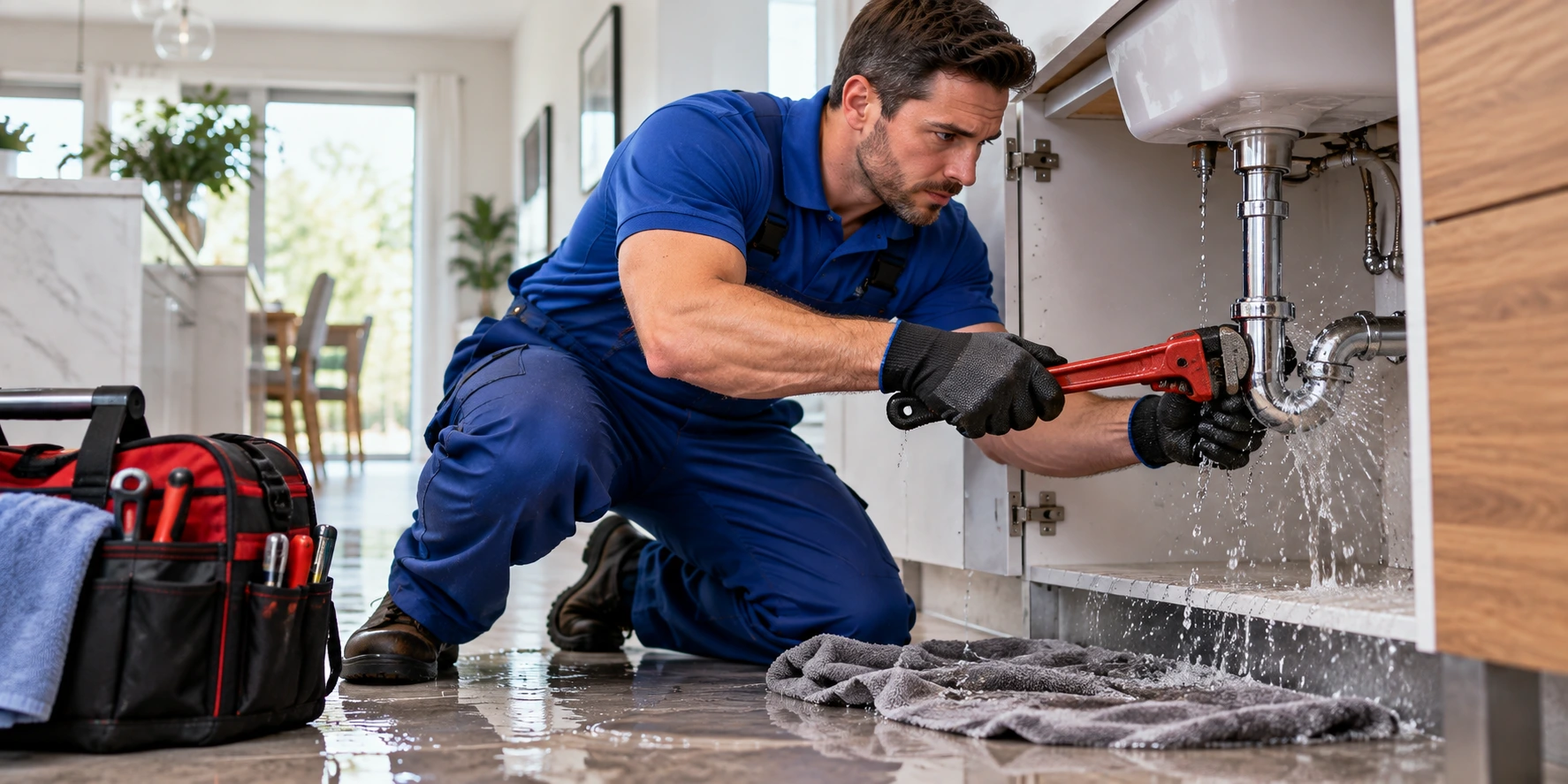
When water is already spreading across a Snellville floor, the first minutes belong to the meter, not to a guess about which pipe failed. Snellville Pipe Pros is the emergency plumber in Snellville, GA that houses, townhomes, and condos in 30078 rely on when a supply line lets go. We isolate the buried run from the meter, then handle burst pipe repair, a hot water heater emergency, a sewer backup, an overflowing toilet, frozen pipe repair, and a main water line leak as the fixtures those lines feed.
Houses along Classic Drive in Summit Chase and the 1970s lots off North Road still carry copper, galvanized steel, and older PVC. A ceiling stain in those homes can be a pinhole, a slab leak, or a fitting that finally split. Gwinnett County Department of Water Resources sends soft surface water from Lake Sidney Lanier, near 1.34 grains per gallon, so interior rust stays the common failure. That is why a pressure gauge on the laundry tap comes out before a saw.
We record static pressure, then open one fixture and watch how far the needle drops so we know if the failure is a fixture, a branch, or the service coming in. Floors get a dry path, fittings we remove go in a bag, and the valve we closed stays tagged so nobody opens it by accident. After hours plumber work and weekend plumber work follow that same order, 24/7. The next part walks through what we test first when the house is already wet.
(678) 835-4146
Open 24 Hours
Reliable plumbing solutions for homes and businesses throughout Snellville, GA.
Professional repairs and installations completed with care, attention, and lasting results.
Need urgent plumbing help? Call Snellville Pipe Pros for fast assistance with leaks, burst pipes, backups, and other plumbing emergencies.
The first useful reading on a wet-house call is whether the meter still turns after we close it. Meter-side isolation tells us if the failure is on the city side of the setter or on the house side of the setter. A register that stops when the meter key hits the seat rules out a main in the street. A register that keeps moving with the meter closed is a utility problem, and we stop cutting. How to shut off water in an emergency on a Snellville lot is this valve, not the painted handle in the garage.
Static pressure is the needle at rest with every fixture closed. Flowing pressure is the same gauge while one tap is open. A high static reading with a sharp drop on flow points to a large opening, a burst, or a wide-open fill valve. A low static reading with every tap closed points to a main water line leak, a meter issue, or a slab loop that is already dumping. Those two numbers rule out a lot of guessing before drywall comes off, including interior rust that lowers static even before a split.
With the meter open and one wing of the house valved off, we learn whether the leak is a fixture, a branch, or the slab. Night helps because the house is quiet enough to hear water moving under a slab-on-grade floor. A slab leak at night often shows as a warm tile path and a meter that never quite rests. If sound and the meter still disagree, leak detection with a longer listen is the right tool instead of opening tile at random. Polybutylene from 1978 to 1995, where it appears, fails at the fittings first, so we look there before we blame the slab.
After the failed piece is capped or isolated, we bring static pressure back and watch the needle for a drop that would mean a second opening. The valve we closed stays tagged, the floor gets a dry walking path, and removed fittings go in a bag so nothing is left in the grass. We still complete same-day diagnosis with the gauges on that first visit. A plumber that comes out the same day still leaves a working bathroom in service when one branch can stay live. A second pressure check ten minutes later confirms the cap is holding before we pack up.
The house can be made safer without tools while we are in transit. The goal is less water on the floor and no one on a live electrical path. None of these checks require opening a wall.
A seized valve and a chemical dump both turn a single failure into two. Leave the ceiling intact so we can see the wet pattern. Power and gas appliances stay untouched if the floor is wet.
A burst supply line in a Snellville house does not stay a closet problem. Water follows the slab edge or the joist bay and shows up two rooms away, especially in 1970s crawl space homes off North Road. Burst buried lines in clay-enriched subsoil can empty the service into the yard while the interior still looks dry. Calls for an emergency plumber for a burst pipe at night start with that volume, not with the size of the hole.
What you might notice first is a roar in the wall, a sudden drop at every faucet, a wet carpet that spreads while you watch, a hiss at a hose bib, spray from a crawl space split, or a meter that spins with every fixture closed. A pipe burst behind the wall often soaks insulation before a stain appears. We shut the meter, confirm the branch is dead with a pressure gauge, and only then open the bay far enough to see whether a coupling will hold or the section has to come out.
A dead shower at dawn is inconvenient, but a tank that dumps into the closet is a water heater emergency because the pan rarely holds a full tank. The crew that isolates the house first is who to call when the water heater floods, because the leak may be the tank, the T&P valve, which relieves pressure on the tank, or a supply valve on the wall. In Lakes of Summit copper and PVC houses, a water heater leaking from the bottom at night often means the tank itself opened, not a loose union.
How this shows up in the house is a closet wet under the tank, a rust line at the base, scalding water at the drain, a popping tank that then went quiet, no hot water at every tap, or a breaker that tripped in standing water. We kill power or the gas control, close the tank valves, and drain enough to move the unit if the bottom has failed. Planned hot water heater repair waits until the floor is dry and the vent and supply are safe to reopen.
A slow sink can wait. Sewage at the tub cannot, because every drain is sharing one lateral. The first move is to stop running another fixture and skip chemicals that hide the blockage. Root intrusion in laterals and cast iron from older stock still show up as a weekend plumber call when the lowest fixture belches first.
Signs it is time to call include water in the tub when the washer drains, a toilet that gurgles two rooms away, an odor at the floor drain, sewage at a shower, a cleanout that weeps, or a yard that smells over the lateral. We stop fixture use, check the cleanout, and decide whether a cable clears the trap arm or the backup is in the main. Camera work and drain cleaning belong after the house has stopped taking on sewage.
Appliance gas lines in Snellville houses run to ranges, logs, and many hot water heaters, and a failed connector can leak while the water side of the house still looks fine. If you smell gas or suspect a gas leak, go outside immediately and call 911 – this is a serious emergency that needs urgent attention from the gas company. Hissing at a union, a pilot that will not hold, a rotten-egg odor in the kitchen, dead burners, or a meter that clicks with everything off are reasons to leave the building. We do not treat a suspected gas leak as a water call. After the gas company makes the scene safe, we can cap, reconnect, or replace the appliance connector and test the joints with soapy solution and a manometer.
Sudden flooding is often a supply line, not a roof. Water leaking through the ceiling after a shower or at 2 a.m. usually tracks from a slab leak, a failed angle stop, or an overflowing toilet that will not stop because the flapper and the fill valve both failed. Overflowing fixtures fed by a failed line keep filling even after the tank handle is down because the supply never shut. Summit Chase copper and PVC from the 1970s through the 1990s still use stop valves that seize, so the fixture floods while the handle does nothing.
The usual night pattern is a toilet overflowing and will not stop, a ceiling that drips over a table, a hiss in a vanity, a wet band at the baseboard, spray from a washing machine hose, a closet that was dry an hour ago, and a slab that feels warm in one path. We close the meter if the fixture valve is frozen, pull the supply, and replace the stop or the fill assembly so the bowl cannot refill. Fixture work after the flood is dry is a different visit from this emergency plumbing call.
Occasional hard freezes in Snellville split hose bibs, crawl-space lines, and uninsulated pipe because service lines here often sit shallower than northern practice. A frozen pipe burst in the crawl space can thaw into a spray while the upstairs still has flow. No water after a freeze can mean an ice plug, a split that already emptied the system, or a main water line leak in the yard. Along U.S. Highway 78, mixed 1970s to 2000s houses see both, and the first test is still the meter.
Common first clues are no flow at the kitchen, a hose bib that cracked at the stem, ice on a crawl line, a wet yard over the service, a spinning meter, sudden low pressure at every tap, and a neighbor who still has water. We thaw only after confirming the split location so we are not pumping more water into the bay. If the buried run is the failure, water line replacement is the daylight job after we isolate tonight.
Not every wet room needs a full repipe before sunrise, and not every drip can wait for a weekday. The choice on an emergency plumbing visit in Snellville is what removes the water now versus what will still be dry next week. We use the pressure readings, the pipe material, and whether the wet spot is still growing after isolation. A section repair that will hold gets done in the same visit. A spent service gets isolated tonight and planned in daylight.
Tonight means the meter is down, the failed opening is capped or isolated, and the house is not taking on more water. Burst buried lines, a slab leak that is still feeding, a toilet overflowing and will not stop, and freeze splits on exposed pipe all get isolation before we talk about finish work. If a bathroom can stay live on another branch, we leave that branch open. If the only supply is the failed one, the house stays off until a bypass or a repair is in. That is emergency leak repair in the first hours: stop the volume, then decide.
Daylight is for opening a slab, replacing a hot water heater that already dumped, pulling a spent galvanized branch, or laying a new service after we marked the route. Cutting a floor at 1 a.m. in a ranch rarely helps if the meter is already closed and the rooms are drying. Camera work on a sewer backup that we have already stopped at the cleanout can wait until we can see the yard. Pipe repair on a dry, accessible section is that daytime work, not a second flood call.
The question on water lines is whether a coupling on the remaining pipe will last or the line has to come out. Thin galvanized, polybutylene fittings that have already cracked, and copper with pinholes in a cluster fail again a few feet over. We look at remaining wall, the number of wet spots on one run, and house pressure. If a short repair would sit on rust or on a second pinhole, we isolate and plan the pull. That decision is mechanical, not hopeful.
Snellville Pipe Pros runs the same mechanical order on a weeknight as on a Tuesday morning, because a wrong cut in a wet bay costs more time than a gauge reading. The benefit is fewer holes and a house that is stable before sunrise. Clower St is the shop street, and the truck leaves from there for local houses at any hour.
A gauge on a hose bib is a cheap lesson compared with opening the wrong ceiling. We write the static number and the flowing number so the homeowner hears why we are cutting this bay and not the next one. On Scenic Highway (Georgia State Route 124) the housing mix from the 1970s through newer PEX means the same stain can be three different pipes. The reading is what sorts them. About 34% of housing units here were built before 1980, so rusted galvanized is still a live possibility behind a 1970s wall.
The truck carries meter keys, copper couplings, galvanized repair sleeves, PEX and PVC transition fittings, and fill valves that match common toilets in this city. The Grove at Towne Center homes from the 2010s run PEX and PVC, so those fittings are on the truck rather than a second trip at dawn. Older copper in Lakes of Summit needs different stops. Matching the era on the first visit is what keeps a night call from becoming a dry-house return with no water.
We do not walk out on a slick floor with an unmarked valve. The shutoff stays tagged, a dry path is mopped to the door, and debris leaves in a bag. Fixtures we disabled are named so nobody opens a capped line. That close-out is part of the visit, not a favor.
A 24 hour plumber in Snellville still has to measure before cutting, and that is the point of after hours coverage. We take wet-house calls through the night, 24/7, with the same meter-first order. Weekend plumber visits follow it too, including freeze splits and overflowing fixtures. Hours do not change the test, only how dark the crawl space is.
Appling sandy loam around Snellville sits over clay-enriched subsoil that drains slowly, so a night leak pools against a slab instead of moving off the lot. Humid summers with July highs near 89°F push irrigation and house lines together, and a weak coupling fails while a hose is running. Occasional hard freezes then split shallow services, hose bibs, and uninsulated crawl-space pipe. Those three loads are why a small drip becomes an emergency plumbing call by morning.
When the flood has stopped but the source is still a guess, leak detection is the right visit instead of another emergency cut. A quiet listen and a meter watch belong there. Emergency plumbing is for water that is still moving. Hunting a stain after isolation is a different job. Slab paths that only show as warm tile also sit on that work, not on a night flood visit.
Once the house is stable, pipe repair is the place for a section that we already isolated. That work is scheduled, not a wet-floor scramble. Copper pinholes in a cluster still need a longer view than a single coupling. We send that job there when the emergency is over and the remaining pipe is the question.
If the buried run from the meter is the failure, water line replacement is the work for pulling that line rather than living on a temporary cap. Isolation tonight keeps the house dry. The new run is daylight work with the route marked. We do not treat a spent service as a series of night clamps.
How to shut off water in an emergency is the meter first, then the house valve, then the fixture stop. If the house handle is painted over or the main shutoff valve will not turn, do not wrench it harder, because a broken stem leaves the pipe open. The yard meter still isolates the service on most lots. Close it slowly clockwise, then open a tub faucet so leftover pressure bleeds off and the spray dies. We free or replace a seized house valve only after the meter is down.
A pipe burst behind the wall often starts as a pinhole in galvanized steel or a split in copper at a fitting. In older houses the first water soaks insulation and the back of the drywall, so a bulge or a stain shows hours later rather than a drip in the room. High house pressure makes that hole grow once the cavity fills. We shut the meter, check whether other fixtures still hold static pressure, and open the smallest hole that shows the fitting. If the remaining wall is thin, a coupling on that spot will not last and the section has to come out.
A small drip under a slab can wait if the meter is already closed and the rooms are dry. A warm path in the floor, a spinning meter with every tap off, or water at a baseboard means the slab loop is still feeding the leak. Night is a good time to listen because irrigation is quiet around The Grove at Towne Center. We isolate zones, listen, and decide whether a clamp or a reroute is the daylight repair. Leaving a slab leak open overnight keeps moisture against the slab in this clay subsoil and can lift flooring by morning.
Galvanized pipe in 1970s homes rusts from the inside, so the wall left at a coupling can be paper thin. A short repair holds if the cut lands on bright metal and the adjacent run still has thickness. If the cutter chatters or the inside is mostly rust, the coupling weeps because the threads have nothing to bite. We measure remaining wall and house pressure before we treat a section as a keeper. When that branch is spent, pulling the line is the repair that stays dry, not another clamp on thin pipe.
If the closet floor is dry, the breaker can be switched off before anyone steps in, and the tank valves plus the house meter should close if water is still spreading. A water heater leaking from the bottom at night is usually the tank, not a union that will snug with a wrench. Standing water near the electrical box is a no-go. We drain enough to confirm the failure, cap the lines, and keep the closet from feeding the hallway. Replacement waits until the pan, the vent, and the floor are safe, because age and corrosion open the tank, not soft city water.
Snellville Pipe Pros handles emergency plumbing in Snellville after hours and through the night, including weekends. The sequence does not change at 2 a.m.: meter isolation, a static pressure reading, then zone checks so we are not cutting the wrong bay. Summit Chase, Lakes of Summit, and lots along North Road are regular night routes for burst pipe repair and slab leaks. We run same-day diagnosis on those visits with gauges on the laundry tap before anyone opens a chase. If the house is wet now, that is the work we come out for.
Stop every washer, shower, and dishwasher so the stack is not still being fed. What to do when sewage backs up in the tub is not a chemical dump, because the blockage may be in the lateral and the chemical sits in the tub. The lowest fixture in a ranch house shows first, often a tub or floor drain. We check the cleanout, run a cable if the stoppage is in reach, and camera the line if the backup returns. Keep people off the wet floor until the water is gone and the trap is holding.
No water after a freeze can mean ice still in a crawl-space line, a split that already emptied the pipe, or a main water line leak that opened when the thaw started. If the meter in the yard still turns, water is leaving the system somewhere even if the kitchen is dry. Hose bibs and uninsulated pipe in Snellville crawl spaces are the usual split points because the service is often shallow. We find the split before any thaw water is added, then isolate that section. A quiet meter and a frozen but intact line is a different job from a burst that is already spraying.
When a Snellville house is already wet, Snellville Pipe Pros starts at the meter, reads pressure, and isolates the failure so the rest of the home stops taking on water. Burst pipe repair, hot water heater failures, sewer backups, overflowing toilets, freeze splits, and main water line leaks all follow that order in this city. After the rooms are dry, the plumbing services list covers the slower jobs, and our Snellville plumber crew handles the ordinary weekday work. Emergency plumbing stays the night work: stop the water, then finish what daylight allows.
Reach out to us for assistance.
ZIPs we cover: 30039, 30078