Water Heaters

Snellville Pipe Pros provides comprehensive water heater repair and installation services for homes and businesses throughout Snellville. When your system leaks, stops producing hot water, recovers slowly, or performs inconsistently, we diagnose the issue and recommend the right repair or replacement solution.
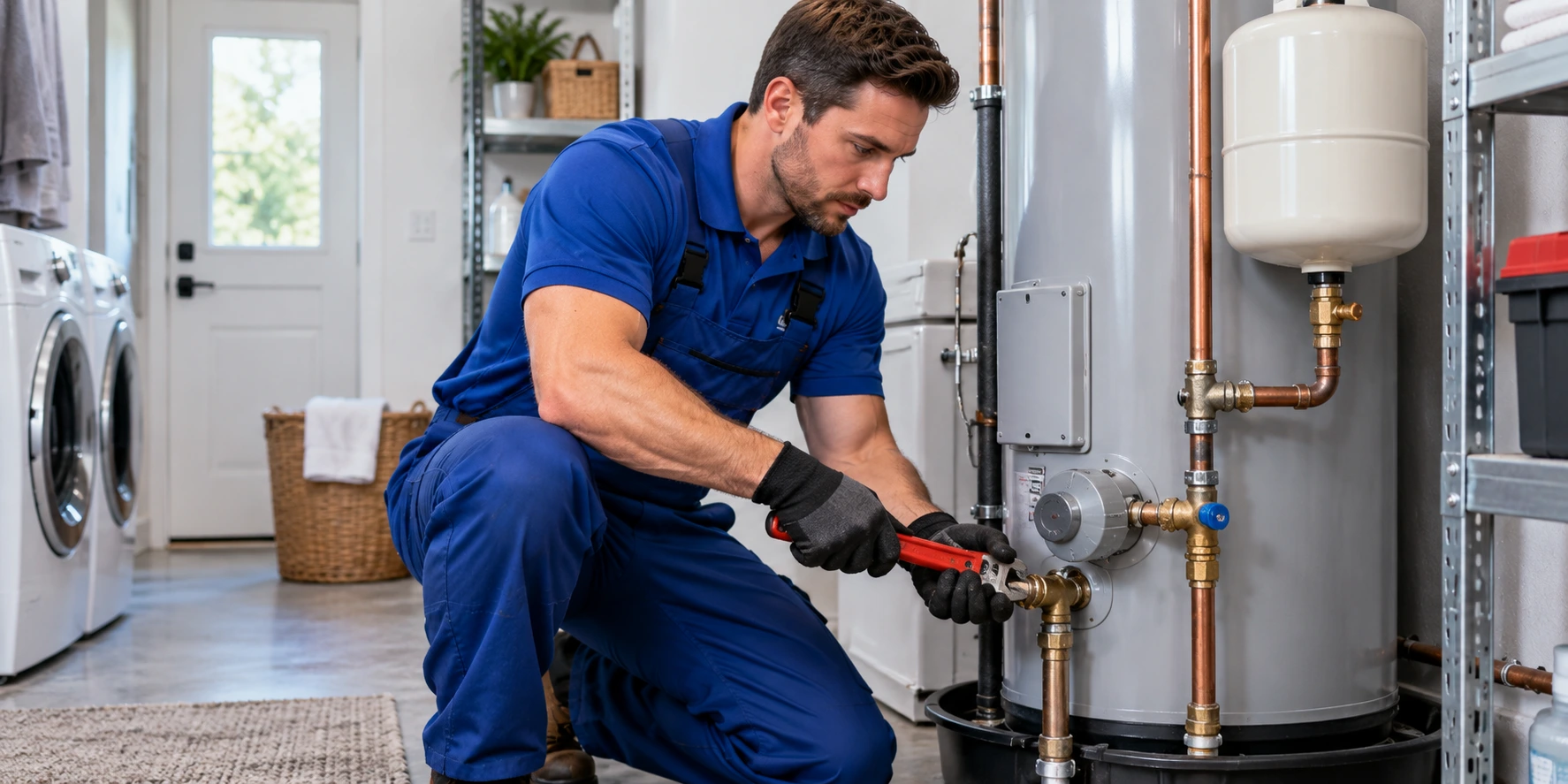
Plumber servicing a residential water heater and plumbing connections

Water heater repair in Snellville, GA for tank and line issues

When a hot water heater quits, Snellville Pipe Pros repairs the tank, the valves, and the supply lines that feed it for houses, townhomes, and condos in Snellville. We take water heater repair in Snellville, GA on electric and gas water heater calls, and we run those visits 24/7. Families in 30078 also ask us for pipe repair, drain cleaning, fixture installation, leak detection, and water line replacement when the problem is not only the tank.

In Summit Chase, many 1970s to 1990s houses still send copper or PVC into a garage tank, and Gwinnett County Department of Water Resources delivers surface water from Lake Sidney Lanier that stays soft to slightly hard. That chemistry eats steel nipples and anode rods long before crust ever fills the bottom of the tank. We read pressure and temperature before we drain anything, and we leave the closet dry with the discharge line back on the T&P valve, which relieves pressure on the tank.

A cold shower in a condo off Oak Road gets the same order of tests as a tank on a crawl space along Pinehurst Road. Hot water returns on the visit when the part is on the truck, or the next step is written down before we leave. The sections below show what we measure first on a Snellville tank and why that order matters.

Contact us today.

LOCAL PLUMBING EXPERTS

Reliable plumbing solutions for homes and businesses throughout Snellville, GA.

QUALITY WORKMANSHIP

Professional repairs and installations completed with care, attention, and lasting results.

Need urgent plumbing help? Call Snellville Pipe Pros for fast assistance with leaks, burst pipes, backups, and other plumbing emergencies.

What we test on a hot water heater first

On a hot water heater call in Snellville, Snellville Pipe Pros treats the tank as the last fitting on the supply, so the order of tests starts at pressure and safety, then heat, then the connections. Skipping that order is how a good shell gets dragged out of a garage. The steps below are the same on a crawl-space tank and a slab tank.

House pressure at the cold shutoff

Incoming water makes or breaks a tank. We gauge static pressure on the cold shutoff at the heater before we pull an element or blame a thermostat, because a weak buried run from the meter can starve the tank and mimic a failed heating element. A reading that sags when a hose bib opens points to the service line, not the anode. That order keeps us from replacing a healthy electric water heater when the real fault is underground.

Nipples, unions, and flex lines

Leaks at the top are often nipples and unions, not a ruptured tank. We dry the head, run heat, and see which thread weeps, then we check dielectric unions and flex lines that have cooked in a garage. Polybutylene from 1978 to 1995 still shows up on heater connections in mixed-era additions, and those fittings get replaced while the tank is out. Supply-line work belongs with water heater installation when the old lines would only stain a new shell.

The T&P valve, anode, and tank shell

The T&P valve is the last safety on the shell. We lift the test lever into a bucket and watch for a full-diameter dump, then we inspect the discharge pipe for glue, caps, or a run that goes uphill. A valve that weeps at rest can be a bad seat or house pressure that never sleeps. The anode rod comes out next if the nipple will break free, because a spent rod in this city water means the shell is already on borrowed time.

Elements, thermostats, and burners

On an electric water heater we meter the upper thermostat first, then the upper element, then the lower pair, because the upper stats feed the lower circuit. An open upper element gives a tank of cold water, while an open lower element gives a short shower and a long recovery. On a gas water heater we confirm the control is calling, then we watch the burner, the flame sensor, and the draft. Same-day diagnosis on these calls is a set of readings, not a guess from the age sticker.If you can reach the tank safely, a few looks help us pack the right parts. Stay off the roof and out of a crawl if the hatch is tight. Write down whether the cold taps are weak too, because that clue lives on the street side of the meter. Leave draining, tightening, and T&P caps alone until those readings are done.

Safe Checks You Can Make Before We Arrive

  • Note whether the tank jacket feels warm in a band around the middle.
  • See if the breaker for an electric water heater has tripped, and leave it if it will not hold.
  • Look in the pan or on the slab for standing water.
  • Check that the cold shutoff at the tank is open.
  • Listen for a burner or a click after you turn a hot tap.

What Not to Do With a Water Heater

  • Do not drain the tank through the boiler drain until someone has confirmed the shell is sound.
  • Do not crank nipples or unions while the system is under pressure.
  • Do not tape or cap the T&P discharge.
  • Do not keep resetting a high-limit that trips twice in a day.
  • Do not run the heater if the tank is empty.

Common hot water heater problems in Snellville

No hot water or not enough hot water

A house without hot water stops dishes, baths, and laundry in the same hour, and that hits condos as hard as detached houses in Snellville. Water heater repair for a condo still starts at the tank even when a shared closet makes access tight. The shower goes cold after a minute, the kitchen tap never really heats, and both floors lose hot water together. The tank jacket stays cool after hours of power, and recovery after one load of laundry takes the rest of the afternoon.To fix no hot water fast we still meter before we drain. Electric water heater not working calls get a 240-volt check, then thermostat and heating element replacement if an element is open and the shell is dry. Flame-fired tanks get a control and burner check. The Grove at Towne Center has many 2010s PEX runs into newer tanks, and those usually fail in the control, not the pipe. Lukewarm water at 7 a.m. still matters when everyone leaves for work on U.S. Highway 78.

A leaking water heater in the closet or garage

A leaking water heater ruins drywall and garage storage faster than a cold shower does, especially on slab houses in Snellville where water has nowhere to fall but across the floor. Water heater leaking from the top often shows as a wet fitting at a nipple or union. The pan holds a rust-colored puddle under the boiler drain, and insulation feels soggy on one side of the jacket. The T&P discharge drips even at rest, or water tracks along the cold flex line and looks like a tank failure.We dry fittings, run the burner or elements, and watch the source. Nipple and union leaks get new dielectric parts, while a perforated shell gets a new tank and new supply lines when the flex is cooked. Hidden moisture beside a slab tank is a reason for leak detection rather than another roll of tape. Homes along Pinehurst Road with 1970s slabs often show the leak at the pan first.

Tankless water heater problems in newer houses

Tankless units in newer Snellville houses fail in different ways than tanks, but they still sit at the end of the same supply. A tankless water heater not heating leaves a whole house on cold water with no stored backup. The display shows an error after a long shower, or hot water never arrives except as a cold sandwich. Screens at the inlet pack with grit from the line, and a unit that used to modulate now short-cycles on every tap.We clean screens, check the flow sensor, and confirm venting and fuel or power. City water here rarely scales a heat exchanger the way hard well water would, so we do not sell a descaling visit the house does not need. Grit from a disturbed service line is a different story and may need water line replacement with the heater service. New streets around The Grove at Towne Center see more tankless than older subdivisions.

Rusty or discolored hot water at the taps

Rusty water stains enamel and makes people dump a tank that might only need an anode. In older Snellville housing the hot side turns first because the shell and the nipples live in heated, oxygenated water. Rusty hot water from the taps shows up in the tub first, and aerators on hot lines fill with brown grit. The cold side stays clean, and flushing the boiler drain runs orange then clears, or it never clears.Anode rod replacement can buy time if the shell is still tight and the nipple will unscrew. A water heater flush follows so we can see the color of the water at the bottom. When rust returns in a day, the steel is the source and water heater replacement is the clean repair. North Road houses from the 1970s still have galvanized nearby, so we check whether the rust is the tank or the old pipe.

Noises, pilots, power, and sediment in tanks

Strange noises from the tank

Noise from a tank is the shell talking, and it usually means sediment, steam, or a loose element. People in Snellville garages along Masters Lane hear it first because the tank is not buried in a closet. A water heater making loud noises pops when heat comes on, and rumbling lasts through the whole burner cycle. A bang on fill is often a failing shutoff or a starved supply, and a whistle at the T&P points to pressure.We flush from the boiler drain and feel for sand. Heating element replacement includes the gasket so the sleeve does not keep rattling. If the service line is starving the tank, sediment is a symptom and the line is the job. Lakes of Summit lots with later copper and PVC still collect enough mineral to pop on the bottom after a long idle.

Pilot light and burner problems

A pilot that will not hold leaves a gas water heater silent and the house on cold water in Snellville. Drafty garages along Scenic Highway North blow small flames off the sensor when a door opens. Standing-pilot tanks from the 1990s show this more than sealed-combustion replacements.If you smell gas or suspect a gas leak, go outside immediately and call 911 – this is a serious emergency that needs urgent attention from the gas company.The gas water heater pilot light will not stay lit after several tries, and soot sits on the burner door. Ignition is delayed and then loud, or the flame burns yellow instead of tight blue. The tank stays cold with the control set to heat, and the thermocouple tip looks gray and thin.We read millivolts on the thermocouple as it heats, and we clean the pilot orifice if it is charcoal-soft. Combustion air and a level tank matter in a tight closet. A control that drops out under 200 millivolts gets replaced rather than nursed. Winter drafts after a freeze make this worse on uninsulated garage tanks, which is why we also look at the water lines beside the control.

A water heater that will not turn on

A water heater that will not turn on is a different call from a tank that runs and stays lukewarm. Silence after a storm, a tripped breaker, or a control that never clicks all land in this bucket in Snellville. An electric water heater not working may have a dead upper thermostat and a cold jacket. The breaker will not hold, the closet switch is off, or no click comes after a long hot-tap draw.Thermostat replacement on the upper unit restores the feed to the lower circuit when voltage is present. We do not keep resetting a high-limit that opens twice. For flame systems we confirm millivolts and then the control board on newer tanks. Houses off Scenic Highway (Georgia State Route 124) mix 1970s panels with replacement tanks, and a weak pair of breakers can look like a dead heater.

Sediment buildup and poor recovery

Poor recovery after showers is often sediment on the bottom or a failed lower element, not a tank that is simply old. Laundry plus back-to-back showers strip the stored heat, and the burner or elements cannot catch up through a layer of grit. Summer watering in Snellville adds load on the same supply the heater uses to refill. Showers run hot, then lukewarm, then cold, and the boiler drain coughs sandy water.We flush until the water runs clear, then we test the lower element and the dip tube. Sediment buildup in this city is modest because the water is not hard, but grit from line breaks still piles up in a tank that never gets opened. If incoming pressure is poor, the heater cannot refill, and a tired pipe in the wall does more damage than another flush. That is also when we talk about water heater replacement rather than another cleaning.

When to repair versus replace a water heater

Repair versus replacement turns on four things we can see in a Snellville closet: the shell, the nipples, the elements or burner, and the supply. A sound shell with an open element is a repair. A weeping weld is a replacement, even if the thermostat is new. Nipples that spin off and take tank threads with them usually mean the top of the steel is tired. Incoming pressure that collapses when a hose runs means the buried run needs work whether the tank stays or goes.When to replace versus repair a water heater in a 1970s Snellville house is not a birthday calculation. About 42 percent of local housing went up from 1980 to 1999, and those copper and PVC supplies often outlive a builder-grade tank. Polybutylene that appeared from 1978 to 1995 does not. If we are already pulling the heater, those brittle connections come out so the next tank does not sit on the same fittings. That pairing is ordinary water heater installation work on the same visit.Gwinnett County Department of Water Resources sends Lake Sidney Lanier water into these tanks. County figures put hardness near 1.3 grains per gallon, so nipples corrode before scale fills a tank. Heating element replacement, thermostat replacement, and a new pressure relief valve can restore a tank whose anode still has body. A burner that soots after a cleanup pushes a gas water heater toward replacement. The best water heater for an older home is often a standard tank that fits the pan and the vent, not a unit that needs more pressure than the service line can give.How long water heater replacement takes depends on the pan, the hookup, and the lines. A clean electric swap in a Snellville garage can be a morning once the tank is on site. Adding supply-line work, a drain that has to be opened, or a vent change stretches the visit. We replace an old water heater with the lines that failed beside it when those lines would only stain the new jacket. Pressure, not the color of the tank, decides whether a section of pipe will hold.
Reliable Plumbing Services in Snellville, GA
From everyday plumbing repairs to urgent problems, Snellville Pipe Pros delivers dependable solutions for homes and businesses with quality workmanship and responsive service.

Why homeowners choose us for heater work

We start at the supply, not the age sticker

A tank can look tired and still heat if the nipples and the service line are sound. From the shop on Clower St we see eight-year shells fail at a weld and twenty-year tanks take a new element and keep working. Matching the repair to the part that failed keeps a good tank in the house. Pressure at the cold shutoff is part of that call every time.

The truck carries parts Snellville tanks usually need

Upper and lower elements, thermostats, T&P valves, anode rods, nipples, and common flex connectors ride on the truck. That stock is how water heater repair the same day happens when the shell is dry and the fitting is standard. Odd-size pans and sealed-combustion vents still take a parts run. We tell you that before we leave the driveway, not after the old tank is on its side.

We test before we drain or cut

Same-day diagnosis on a heater call still starts with power, flame, and pressure on a full tank. Draining first hides whether a leak is a nipple or a shell. Cutting a flex line before a pressure reading can also hide a starved supply. The extra minutes of testing save a tank that only needed an element.

We leave the closet in working order

The pan is dry, the T&P discharge is on, and the shutoffs work by hand. Debris from a tank swap does not stay on a garage slab along Henry Clower Boulevard. Labels on the cold and hot sides help the next visit. Night and weekend calls get the same closeout, because we run 24/7 and still check heat at a tap before we pack the hoses.

What Snellville clay and city water do to a heater

Gwinnett clay loam under a slab holds moisture against garage pans, so tank bottoms rust from the outside while the inside is still clean. Summer watering and irrigation demand drop house pressure, and a hot water heater looks dead because it cannot refill between showers. Occasional hard freezes burst hose bibs, crawl-space lines, and uninsulated garage tubing that feed the tank. Those three patterns, soil then summer then winter, show up as nipple leaks, slow recovery on hot days, and split flex lines after a freeze.

Questions about no hot water and tank leaks

Why is there no hot water in my Snellville house?

A tank can sit full and still send cold water if the upper thermostat has opened or the high-limit has tripped. A weak buried run can also starve the heater so it never refills between showers. On electric calls we check the breaker, then both elements, then incoming pressure at the cold shutoff. Garage tanks in Summit Chase often fail at the upper element while the lower one is still intact.

What does it mean when a water heater is leaking from the top?

Water heater leaking from the top is usually a nipple, a union, or the pressure relief valve, not a split shell. Those fittings sit in the same soft water that thins steel threads. We dry the top, run the heater, and watch which fitting weeps. If the shell itself is rusted through at a weld, replacement is the path, and we look at the flex lines so the new tank does not inherit a tired supply.

Can you fix no hot water fast on an electric water heater?

When an electric water heater is not working, the fast path is still a measured path. We verify 240 volts at the upper thermostat, read continuity on each element, and only then drain the tank if an element has to come out. A reset at the high-limit can restore heat for a night and fail again by morning, so we do not stop at the red button. Houses near Lakes of Summit mix older breakers with newer tanks, and a weak circuit can look like a dead element.

Why is there rusty hot water from the taps in an older home?

Rusty hot water from the taps often means the anode is gone and the steel shell is giving up iron. About 34 percent of Snellville housing went up before 1980, and those tanks and galvanized nipples shed rust into the hot side first. Cold water that stays clear while hot water stains the tub is a classic tank clue. When the water stays rusty after a flush, the shell is the source and a new tank is kinder than another anode.

Questions about replacement and after hours

What causes a water heater making loud noises in a garage tank?

A water heater making loud noises is usually sediment popping on the bottom, a failing element sleeve, or steam at a hot spot on the shell. Even city water that stays only slightly hard drops a little mineral, and a garage tank on a slab can sit for years without a water heater flush. We drain from the boiler drain and feel whether the water runs clear. If the noise is a hammer in the pipes, that is a supply or shutoff problem, not the tank.

Why will a gas water heater pilot light not stay lit?

A gas water heater pilot light will not stay lit when the thermocouple is weak, the pilot orifice is dirty, or a draft from a garage door blows the flame off the sensor. We watch the millivolt reading as the thermocouple heats, and we check the thermopile on standing-pilot controls. Combustion air in a tight closet can also starve the burner. After any fuel odor, the utility has to clear the scene before we work on the control train.

When should I replace versus repair a water heater in a 1970s house?

When to replace versus repair a water heater turns on the shell, the nipples, and the supply, not the age sticker alone. A 1970s house on North Road may have galvanized still in the walls and a tank that is only eight years old. If the shell weeps through a weld or a pit, we replace the tank. Polybutylene that was run to the heater between 1978 and 1995 is a reason to change the supply while the tank is out, because those fittings grow brittle in the same closet heat that cooks the tank.

Who handles water heater repair near me in Snellville after hours?

We take after-hours heater calls for houses and condos in Snellville when the tank dumps into a garage or the showers go cold at night. Checks after dark still include pressure at the cold shutoff, power or flame, and whether the leak is a fitting or the shell. If the buried line is the real fault, we stabilize the tank and plan the line work. Night visits still end with a dry floor and a working T&P discharge.

Snellville Pipe Pros repairs and replaces hot water heaters for houses, townhomes, and condos in Snellville, including the nipples, valves, and supply lines that fail with the tank. Electric water heater work, flame-fired tank work, and tankless water heater service all follow the same idea: measure pressure and heat, then fix the part that failed. Keep us on the list when showers go cold, the pan weeps, or the tank never stops popping.

When the fault is a pipe in the wall, pipe repair is the right visit instead of another tank. When the wet spot has no fitting in sight, leak detection should come before anyone cuts a slab. When the buried service is weak, water line replacement belongs with the heater swap. Broader house plumbing is on our plumbing services list, and the Snellville plumber home explains how we work the rest of the piping.

Reach out to us for assistance.

ZIPs we cover: 30039, 30078

Begin Professional Plumbing Service Now
Don’t risk it with your plumbing. We combine years of experience with modern technology to deliver lasting repairs and installations. Our team respects your time and your property.