- 2386 Clower St, Snellville, GA 30078
- (678) 835-4146
Garbage Disposal Repair
Snellville Pipe Pros provides reliable garbage disposal repair and replacement for homes throughout Snellville. We troubleshoot jams, leaks, humming motors, slow drainage, and units that will not start, helping keep your kitchen plumbing working safely and efficiently.
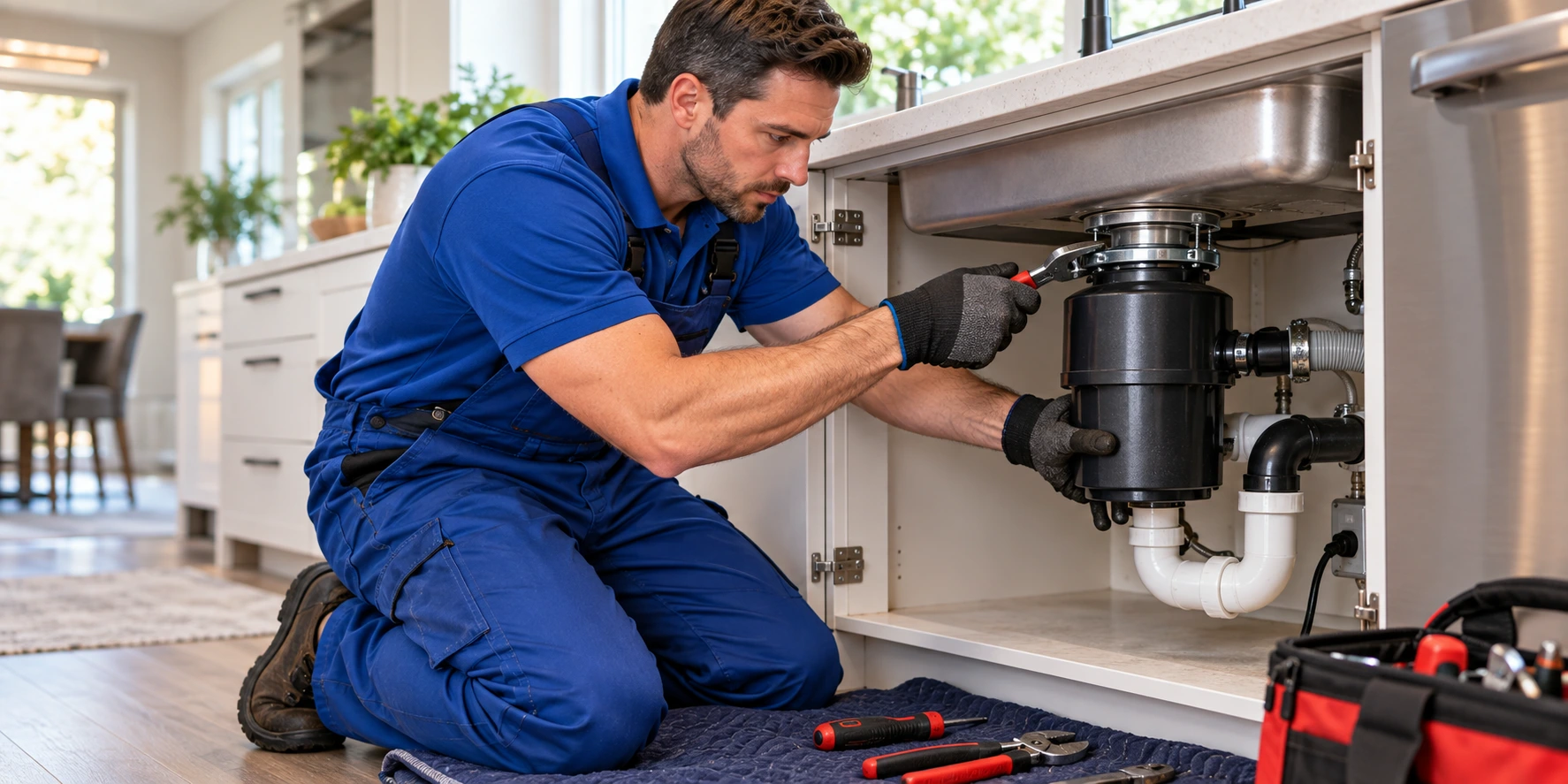
When a kitchen disposal fails in Snellville, we look at the water feeding the sink and the waste line that has to carry the grind away. Snellville Pipe Pros handles garbage disposal repair in Snellville, GA for houses, townhomes, and condos, and we work 30078 every day. A jam at the impeller, a wet cabinet floor, or a slow bowl often starts in the trap and the line in the slab, not only in the motor.
We cover plumbing services such as drain cleaning, pipe repair, fixture installation, hot water heater work, leak detection, and water line replacement when the kitchen trouble is larger than one appliance. Along North Road, 1970s houses still hide thin tubular drain kits under original cabinets, and those tees stain the wood long before the grind ring wears out. Newer kitchens near The Grove at Towne Center more often jam a healthy PVC kit with food than rust a fitting. Summit Chase copper and PVC shows both patterns.
The first visit checks the reset button, which is the small breaker on the bottom of the unit, then the dishwasher knockout, then the trap, before anyone cuts a discharge tube. We dry the cabinet floor and set the doors straight when the wrenches are packed. We answer 24/7 when water is spreading under a Snellville sink, and the next section is the test order we use.
(678) 835-4146
Open 24 Hours
Reliable plumbing solutions for homes and businesses throughout Snellville, GA.
Professional repairs and installations completed with care, attention, and lasting results.
Need urgent plumbing help? Call Snellville Pipe Pros for fast assistance with leaks, burst pipes, backups, and other plumbing emergencies.
The wall switch can be on while the unit is tripped, so we meter the outlet and press the reset button before we call the motor dead. That reading shows whether the winding never got current or whether it got current and stalled. If the panel breaker is open, we look for a locked flywheel that pulled amps. In a Snellville kitchen a GFCI in a wet cabinet can also drop the outlet.
We light the splash guard, then turn the flywheel from below with a hex key to feel a bone, a twist tie, or glass on the grind ring. A free wheel with a hum points to a failed start winding. A locked wheel with a strong hum is a jam, and another flip of the switch only heats the motor. Houses off U.S. Highway 78 still send fibrous peels that lock older hoppers.
Water on the cabinet lip often comes from the sink flange, the ring that clamps the disposal to the bowl, not from the motor housing. We run the tap and watch the putty line with dry paper under the screws. Movement at a 3-bolt ring on an older Snellville sink is a mount job. A torn splash guard can sling water and mimic a leak from below.
The tubular kit, the dishwasher tailpiece, and the P-trap, the U-shaped section that holds a water seal, get a hand check while the unit runs. A wet nut at the discharge is not a bad motor. After the trap we watch the kitchen line take water without the other bowl rising. If the impeller sounds healthy and the bowl stands, the clog is downstream.
A humming disposal with a locked flywheel will heat the windings if the switch keeps getting flipped, and in a Snellville kitchen that often happens during dinner. The impeller tries to turn against a bone, a fruit pit, or a metal twist tie, so the grind ring cannot move. Older motors stall with less torque than a new one, which is why a small jam sounds so loud.
The unit hums when the wall switch flips, yet nothing in the chamber turns, and the hex socket under the housing will not rotate. Water stands in the bowl, peels sit in the splash guard, and the dishwasher may pause because it cannot dump into a locked hopper. A warm motor and a faint electrical smell can follow a few tries even while kitchen lights stay on.
We cut power at the switch, confirm the reset is in, and free the flywheel from below before we apply current. If the winding still hums with a free wheel, the start circuit is gone. If it spins and grinds, we flush the trap and watch the line. Fibrous peels that belong in the trash are a common lock after a big meal.
Silence at the switch is a different fault than a hum, and we treat it that way in Snellville houses. The motor may have no current, the reset button may be out, or the winding may be open. A wet cabinet can trip a GFCI and look like a dead disposal.
The wall switch does nothing and the hopper stays still. The reset button on the bottom pops out and will not stay in. The kitchen breaker sits at the off stop, the dishwasher finishes with standing water, and there is no hum and no click from the relay. A dark outlet under the sink means the GFCI has opened.
We meter the receptacle, press the reset, and only then decide the motor is open. How to reset a garbage disposal that will not start is a dry-floor job, and a wet floor means we dry and find the leak first. If the unit trips the breaker on a free wheel, the winding is shorted and we replace it. Lakes of Summit kitchens with later copper and PVC still see a cold motor lock on hardened grease.
Cabinet floors go dark at the back corners first, and many owners blame the motor housing when the sink flange is seeping. The flange is the clamp ring at the stainless bowl. On older Snellville sinks the 3-bolt pattern loosens as the sink shifts on a slab that stays damp.
Water beads at the mounting screws while the discharge tube stays dry, and putty crumbs collect on the cabinet floor. The sink can move a little at the rim, and the splash guard drips after each wash. A rust line forms on a metal ring, and the wood under the bowl feels soft while the motor paint stays clean.
We support the unit, reseat or replace the flange, and test with a full bowl so the putty line proves dry. A cracked hopper is replacement, and a loose ring is a mount job. Along Scenic Highway (Georgia State Route 124), mixed copper, PVC, and PEX kitchens show both failures. We do not swap a motor to hide a flange drip, and we say so at the cabinet.
Leaks at the discharge elbow or the dishwasher hose mean the kit is the failure, not the grind chamber. Thin tubular pieces in older Snellville cabinets oval at the compression nuts. The dishwasher hose on the small inlet slips when the clamp rusts.
The cabinet puddle sits toward the back wall under the pipes, not under the motor, and the dishwasher hose weeps at the inlet. The discharge tube can spin because a set screw never bit the body. Water backs up into the other sink if a slipped tube dumps on the floor, and dishwasher backing up into the sink can mean the knockout plug is still in the inlet. White crust forms on a metal tee.
We replace the kit, cut the knockout if it is still blocking the inlet, and run both the tap and the dishwasher. A disposal leaking from the bottom of the housing is a cracked body and needs a new unit. A kit leak should not be wrapped in tape, because the nut will weep again on the next grind.
A strong grind with a bowl that will not empty is a line problem wearing a disposal disguise, and that mix is common on Snellville slabs. Gwinnett clay loam under a flat kitchen waste lets a belly hold grindings. The motor sounds fine while the other bowl rises.
The right bowl stands after a grind, and water backs up into the other sink when the disposal runs. The dishwasher leaves suds in both bowls, and a kitchen sink backup returns hours after it looked clear. The trap feels heavy when we break it, and slow draining repeats after a short cable that never reached the belly.
We time the drawdown after a 30-second grind. If the motor is healthy and the bowl still stands, we open the trap and work the kitchen line rather than hang a new unit. That timed drawdown keeps us from selling a motor to a clog. Summer dishwashing load in muggy weather pushes more scraps into the same 1.5-inch pipe.
Noise and odor are wear reports from the grind ring and the bearings. A rattling flywheel can be a loose impeller bolt or silverware in the chamber. A burning smell after a long hum is insulation cooking on a stalled winding.
The unit grinds with a sharp metal clack, and rattling continues after the water clears. A burning smell rises from the hopper after a stall, and the disposal smells and will not clear even with cold water running. Vibration walks the unit in the mount, and food comes back up as paste.
We pull power, retrieve metal, and inspect the grind ring. A scored ring and a smoking winding are a replacement, and a fork in the chamber is a retrieval and a test. Soft slightly hard city water from Lake Sidney Lanier does not scale these chambers much. The smell is food and standing water in a belly, not hardness crust.
If the cabinet floor is dry and the unit only hums, a few checks help us when we arrive. Standing water changes that advice, because the outlet may already be live next to a puddle. Leave the switch off and keep hands out of the hopper until we meter the receptacle.
Use these only when the cabinet floor is dry.
Skip these steps because they damage windings, seals, or skin.
If the flywheel frees, the winding draws a normal current, and the leak is a nut or a flange, we keep the unit. A new splash guard, a kit, or a reseated 3-bolt ring returns the sink to work without a new motor. We name the parts we changed and why the old grind ring still has life. In Snellville that is often a unit that jammed on peels rather than a winding that failed. Repair is the path when the housing is intact, the hopper is dry, and current draw on a free wheel is normal.
A cracked hopper, a burned winding, or a reset that will not hold means the motor is finished, and we match horsepower and drain outline so the new body sits on the same flange. We can replace a garbage disposal the same day when the truck has the mount style. About 34 percent of housing here was built before 1980, and many of those kitchens never had a unit, so garbage disposal installation needs a cord, a high loop or air gap, the knockout removed, and a bowl that can take the weight. If the stainless is thin, fixture installation is the conversation, not a bigger motor. The Grove at Towne Center already has PEX and PVC kits that take a modern unit with less cabinet surgery than an older metal kit.
If drawdown after a 30-second grind is still standing water, the disposal is not the clog. We open the trap and work the kitchen waste, including a belly in the buried run under a slab. Gwinnett County Department of Water Resources sends soft to slightly hard water, so scale is rarely the plug, and grease and peel mats are. A new motor on a belly will jam again by the weekend. Cable or camera work on the kitchen line is the repair when the impeller already sounds healthy, and thin old pipe in the slab is a different choice than a kit under the sink.
A photo of the hopper, the sink style, and whether the dishwasher ties in tells us which flange to bring from 2386 Clower St. We also want to know if the cabinet is already wet. That detail decides whether we treat it as a leak path or a jam. Snellville Pipe Pros stocks 3-bolt and quick-mount rings on the truck for that reason.
We pick a window that fits the household and we come ready to test, not only to pull a unit. If the floor is wet we bring towels and a pan. Scheduling includes time to run the dishwasher after the kit is on. That extra loop is how we catch a knockout still sitting in the inlet.
We put same-day diagnosis on the motor, the kit, and the line, then we say what the reading ruled out. A humming locked wheel is not a silent open winding. The homeowner should hear why a part stays or goes before a wrench cuts a tube. The order is power, jam, flange, kit, then the waste.
After the grind we run both bowls and the dishwasher, then slide dry paper under the discharge. We wipe the cabinet and set the doors so the next person in the kitchen is not standing on a wet board. Night leaks still get an answer 24/7. A dry paper test after a full grind is the last check, not a glance at the hopper.
Gwinnett clay loam and the clay-enriched subsoil under Snellville slabs drain slowly, so a kitchen waste with flat pitch can belly and hold grindings until a healthy disposal looks clogged. Humid summers and heavy kitchen use send more scraps and grease through that same 1.5-inch line while irrigation load occupies the water side of the house. Occasional hard freezes rarely burst an indoor motor, yet a crawl-space trap on a cold night can sit with still water and feel like a dead unit in the kitchen. We open the cabinet with that soil and those seasons in mind before we blame the grind ring.
If the hopper is free and the bowls still stand, drain cleaning is the visit because the belly sits in the waste. The motor can sound perfect while the line holds grindings. We send that work there instead of hanging another unit.
If a new kit still stains the same cabinet seam, pipe repair is the job. Tubular pieces under the sink are not the only leak path. Wet copper or PVC in the wall needs a different wrench.
If the flange and the kit are dry and the cabinet still floods, leak detection finds the real path. A slab leak can use the kitchen as a drain. We do not keep swapping disposals to chase that water.
A humming unit is getting power while the flywheel cannot turn. That is usually a pit, a bone, or a twist tie against the grind ring. We cut the switch, free the wheel from below, and test under water. If it still hums with a free wheel, the start winding is open. Flipping the switch again only heats the motor, so we stop that cycle first.
The reset button is the small breaker on the bottom of the housing. We only press it when the cabinet floor is dry and the flywheel turns by hand. If it pops back out, the winding is drawing too much current or the unit is still locked. How to reset a garbage disposal that will not start is not a wet-floor trick, and we find the leak or the jam first. A GFCI in the cabinet can also look like a dead motor until we restore that outlet.
A locked flywheel pulls a surge that opens the kitchen breaker even though lights on another circuit stay bright. A shorted winding on a free wheel does the same thing. We meter the outlet, turn the hex socket, and watch whether the breaker opens on a free spin. If it does, the motor is done. If it only opens when jammed, we clear the chamber and test again.
Food paste on the grind ring and standing water in a belly both sour the hopper. Running cold water while grinding helps, but it will not lift a mat in the trap. We pull the splash guard, scrub the ring, and open the trap if water sits. A disposal that smells and will not clear often has the last meal holding in the line downstream. A new splash guard does not fix a belly.
The two bowls share a tee after the disposal. If that tee or the kitchen line is restricted, water backs up into the other sink as soon as the impeller throws volume. We run one bowl and watch the other before we touch the motor. A healthy grind with a rising neighbor bowl is a line job. Suds from a dishwasher make the same path visible.
The dishwasher hose should dump into the disposal inlet. If the knockout plug is still inside that inlet, the dishwasher drains into the sink or sprays the cabinet. A slipped hose clamp does the same. We pull the inlet, remove the plug, and clamp a new hose. That check is part of every install and every leak call on a dishwasher connection.
Yes, if the sink bowl can carry the weight and a dedicated outlet is present. We hang the flange, set a high loop or air gap, and remove the knockout so the dishwasher has a path. To install a garbage disposal in an older kitchen we sometimes need a stronger sink first, and we say that before we drill. Thin stainless from earlier decades can oil-can under a heavy motor.
Snellville Pipe Pros takes night and weekend disposal calls for houses, townhomes, and condos in the city. We still test power, jam, flange, kit, and line in that order after dark, because a wet cabinet at midnight is the same physics as a wet cabinet at noon. Tell us whether the floor is wet and whether the unit hums or sits silent. That report decides what we bring from the truck.
A jammed hopper, a wet flange, or a belly in the kitchen line can all look like the same failure in Snellville, and we separate those jobs on the first visit. Snellville Pipe Pros repairs motors, kits, and mounts in houses, townhomes, and condos, and we stay with the trap until both bowls empty. The plumbing crew in Snellville keeps the same water-first habit on the rest of the house, from the meter run to the fixture. Owners can tell us whether the unit hums, sits silent, or wets the cabinet, and we take it from the reset button to the waste line.
Reach out to us for assistance.
ZIPs we cover: 30039, 30078